Sustainability is one of Hetzner’s core values. We document the renewable origin of 100% of the electricity we use in our data centers with Guarantees of Origin and operate them with a strong focus on energy efficiency. But we do not want to stop there. We aim to reduce our environmental impact across the board. So which environmental impacts are we talking about, and how do we know which measures make a difference? That is where EMAS, the Eco-Management and Audit Scheme, helps us.
What is EMAS?
Reliable data is essential. It shows us which measures are working, what impact they have, and how we can improve them further. EMAS helps us implement these measures systematically and provide clear, verifiable evidence of the results.
Participation in EMAS is voluntary. However, organizations that take part commit to continually improving their environmental performance in areas such as energy use, material use, emissions, and waste. EMAS can also deliver financial benefits: More efficient processes and lower energy consumption can reduce costs over time.
Under the "Energieeffizienzgesetz" (EnEfG) (Energy Efficiency Act), we are required to implement either an energy management system or an environmental management system. We chose EMAS because it not only assesses energy performance but also takes a holistic approach and motivates us to improve in all major environmental areas.
The European Union introduced EMAS in 1993 to embed environmental protection in organizational structures and business operations.
EMAS rests on four key pillars:
- Environmental Management System (EMS): A structured approach to identifying and managing all significant environmental aspects.
- Environmental audit: Internal audits and independent external verification of environmental performance and improvement measures.
- Environmental statement: Transparent public reporting on the EMS and the organization’s environmental performance.
- Demonstrated legal compliance: Evidence that the organization complies with all applicable environmental laws and regulations.
EMAS or DIN EN ISO 14001: What’s the difference?
ISO 14001 is an internationally recognized environmental management standard, adopted in Germany as DIN EN ISO 14001. It sets out requirements for an EMS, from identifying environmental aspects and defining objectives and responsibilities to implementing measures and continually improving environmental performance.
EMAS incorporates all of these requirements, which is why we also hold DIN EN ISO 14001 certification. However, EMAS goes beyond the standard. Organizations must also demonstrate full legal compliance, engage an independent environmental verifier to assess their EMS and validate the data in their environmental statement, and publish that statement.
EMAS in practice: From planning to implementation
The entire process may sound theoretical at first. In practice, it comes down to specific questions, such as: Where do we use how much energy? How efficiently do our data centers operate? Where can we prevent waste? Which legal requirements apply to us?
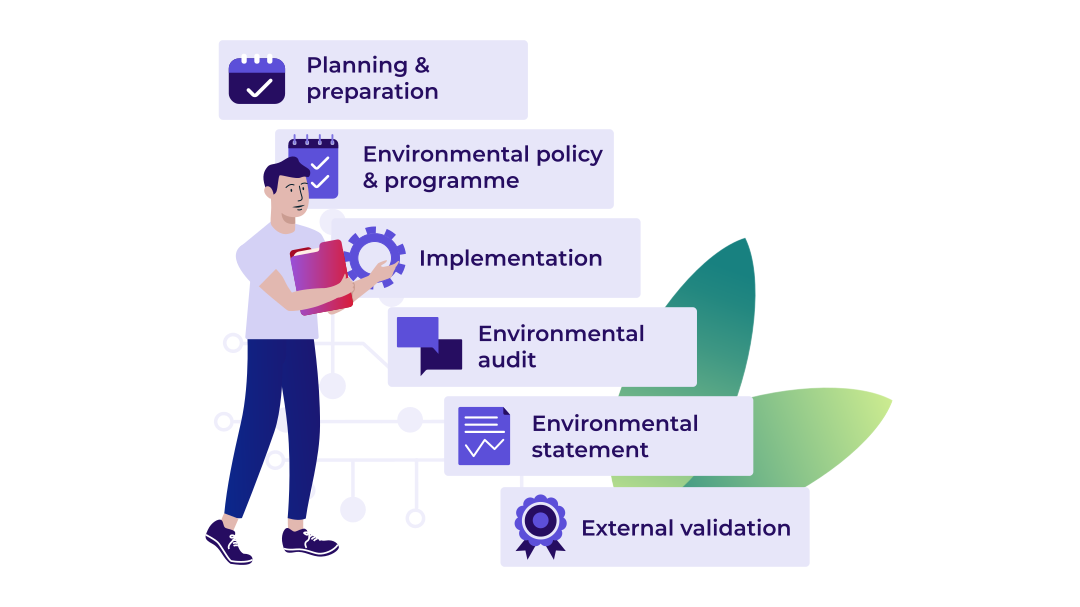
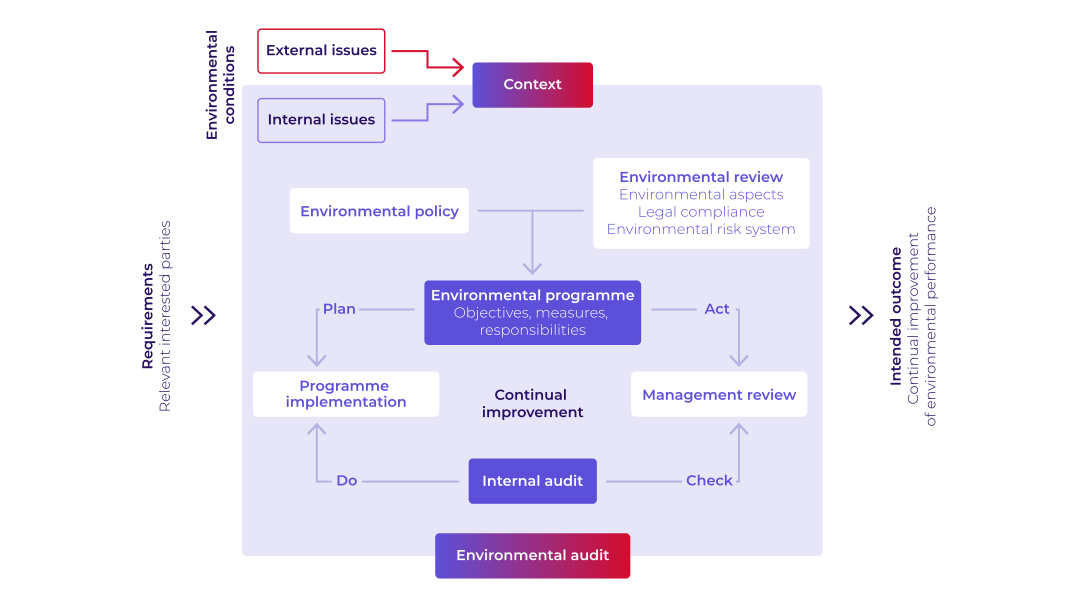
The EMAS process answers these questions step by step. The graphic shows the registration process. Once implemented, EMAS becomes an ongoing cycle: plan, implement, review, improve.
Planning and preparation: Identifying and assessing environmental aspects
Before we set environmental objectives, we need to do extensive groundwork. Planning is the most comprehensive step in the entire process. We weigh costs against benefits, analyze risks, estimate the effort involved, and provide the necessary resources.
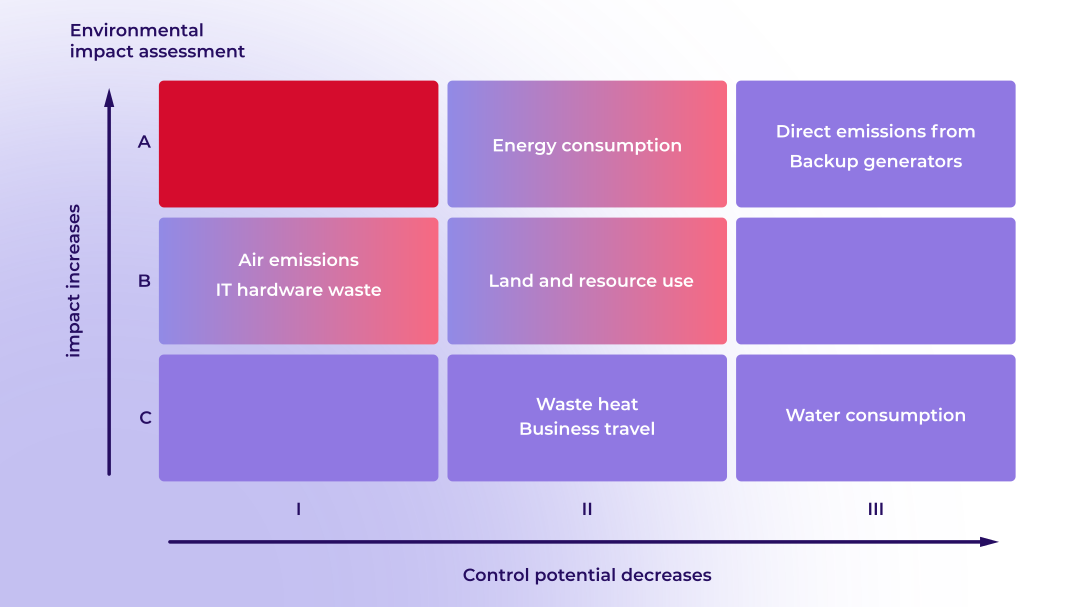
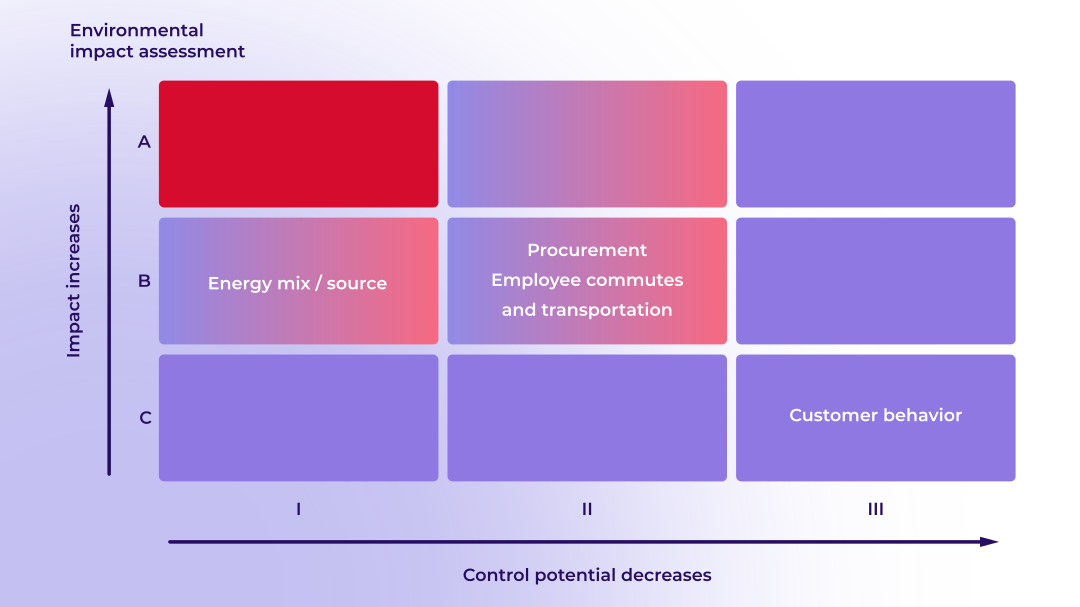
At the heart of this phase, we systematically identify and assess significant environmental aspects and use the results to define concrete measures. We divide these aspects into direct and indirect categories based on how much control or influence we have over them. Direct environmental aspects include emissions, electricity consumption, resource use, and waste from IT hardware. Identifying and assessing these aspects forms part of the environmental review.
Significant direct environmental aspects at Hetzner in 2024:
Significant indirect environmental aspects at Hetzner in 2024:
Environmental policy and programme
After conducting extensive research, we identified the environmental topics that matter most to us. Based on this work, we defined six long-term environmental principles:
- Continual improvement and maximizing energy efficiency
- Reducing CO₂ emissions
- Expanding the use of renewable energy
- Preventing waste and promoting recycling
- Supporting innovation
- Transparency and open communication
We use these principles to develop our environmental programme. It defines:
- Clear, measurable objectives
- Measures
- Responsibilities
The programme provides the strategic direction for the entire system. Our environmental team brings together employees from several departments, including technical operations, infrastructure, procurement, and management. The team meets at least twice a year to define and update the environmental programme and monitor the processes we have implemented.
Implementation: An ongoing process
Next, we put the environmental programme into action and implement all the processes that form part of our EMS. But the EMS does not end there. Once we complete one programme, the cycle starts again: we set new objectives, implement measures, review the results, and make improvements. This turns individual measures into an ongoing process that continuously strengthens the system.
One of our key objectives, for example, is to improve the energy efficiency of our data centers. To track our progress, we measure electricity consumption and analyze the energy used by IT equipment separately from the energy used by supporting infrastructure. We use these figures to calculate Power Usage Effectiveness (PUE), the ratio of a data center’s total energy consumption to the energy consumed by its IT equipment. The closer the value is to 1.0, the more energy-efficient the data center is. With a PUE of around 1.1, we perform significantly better than the German industry average of around 1.4 in 2024. We regularly calculate and analyze our PUE. We assess any deviations and make technical adjustments where necessary.
We continually work to improve cooling, deploy more efficient servers, and reuse hardware.
Internal environmental audit
Once implementation begins, we regularly review the system. We do this through the internal environmental audit and the management review.
We generally conduct the internal audit once a year. It checks whether the EMS works effectively, meets the EMAS requirements, and complies with the environmental objectives and legal obligations. The audit aims to identify weaknesses in the system and uncover opportunities for improvement.
Management then carries out the management review. It assesses the effectiveness of the EMS as a whole and defines corrective or improvement measures where necessary. The review draws on the audit findings.
The graphic shows the EMS described above, including all key stages. It also shows that all the steps form an ongoing process.
Environmental Statement
We publish the findings from the entire process in our environmental statement. In addition to key company facts, Hetzner’s statement covers our significant environmental aspects and provides specific figures on energy use, emissions, water consumption, waste, and land use.
It also describes our EMS and environmental policy and includes a declaration of compliance with legal obligations. In addition, it sets out our environmental objectives for the coming years, along with defined measures and deadlines.
To request a copy of our environmental statement, email us at emas@hetzner.com.
External validation
A government-accredited external environmental verifier assesses the entire EMS. The verifier visits the organization’s sites, reviews documents and key figures, and speaks with employees. The assessment takes place once a year.
Only after the verifier confirms that everything has been implemented in accordance with the applicable requirements can the organization be entered in the EMAS register. EMAS has its legal basis in an EU regulation, and government-regulated accreditation and registration bodies oversee the system in Germany.
The EMAS logo is therefore not simply a certification label that an organization can attach to its communications. Organizations must meet strict requirements to use it.
Conclusion
EMAS is not something an organization can implement “just like that.” It requires clear processes, measurable indicators, and verifiable measures. The EMS is also thoroughly reviewed on a regular basis.
For us, this means continuously monitoring environmental aspects such as energy consumption, emissions, water consumption, and waste. It is not only about documenting what has already been achieved: With EMAS, we commit to continuously reviewing and improving our environmental performance.
This will give you a comprehensive overview of how we are committed to environmental protection and which areas EMAS covers in practice.