Every website, online store, and email ultimately runs on a server, and data centers provide the foundation for these modern internet services. At the same time, they consume energy, hardware, and other resources. As one of Europe’s largest data center operators, we understand the responsibility that comes with that role. That is why we take a conscientious approach to managing the environmental impact of our infrastructure.
But sustainability covers more than environmental issues. It is based on three closely connected pillars:
- Economic sustainability: Processes that remain efficient and economically viable over the long term.
- Social sustainability: Responsibility toward employees, partners, and society.
- Environmental sustainability: Responsible use of energy and resources, and responsible management of emissions.
This article focuses on our environmental measures and on how we systematically reduce the environmental impact of our infrastructure.
What does sustainability mean in IT?
Almost every company that manufactures products or operates infrastructure affects the environment, and the IT industry is no exception. Supply chains and production chains generate emissions and consume resources.
An important first step in reducing that impact is to make the relevant environmental factors measurable. With reliable data, we can reduce our impact in a targeted way.
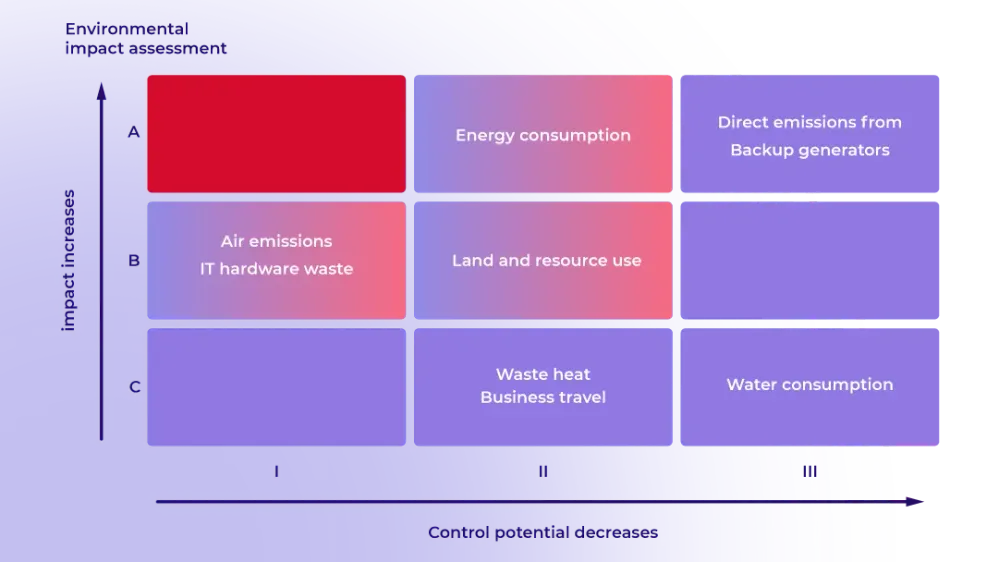
We can directly influence some environmental factors:
- Electricity, water, and resource consumption
- CO2 emissions from operations
- Material use
- Service life and disposal of IT hardware
- Energy efficiency of our infrastructure
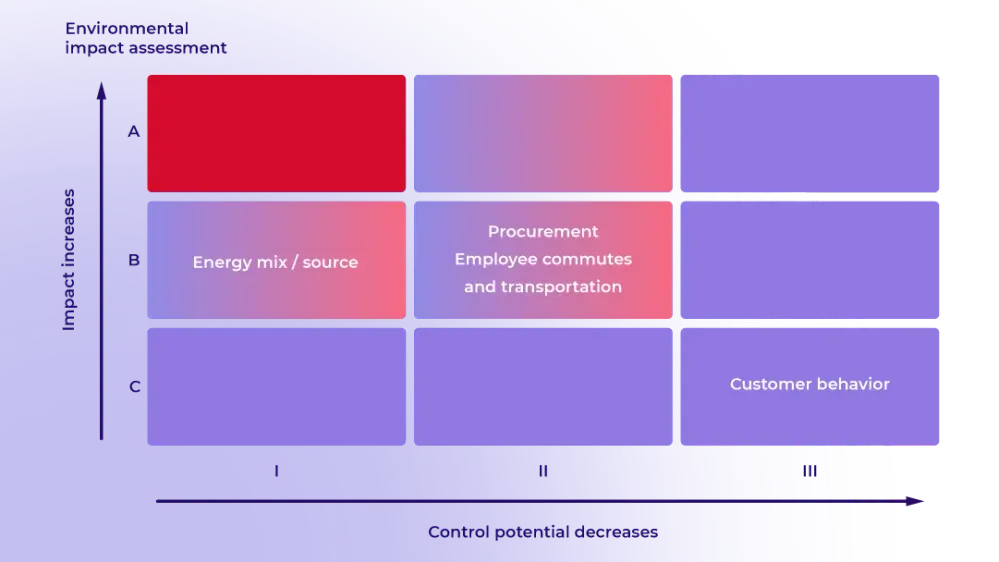
We can influence others only indirectly:
- the mixture of renewable and non-renewable energy sources in the national electrical grid
- supply chains and transport routes
- customer behavior
- employee commutes and transportation
Our goal is to keep our direct environmental impact as low as possible and gradually improve the indirect factors. We do not see growth and sustainability as a contradiction; we think it’s possible to grow in a sustainable and responsible way.
The plan behind it: Our environmental management system
How do we put this into practice? At the core is our environmental management system (EMS). It defines responsibilities and turns our goals into fixed processes. Clear metrics such as electricity consumption, resource use, and similar indicators show us whether we are actually improving. This lets us see what is working well and where we need to make adjustments.
Environmental protection is not something we complete once and check off. It remains an ongoing task. Transparency is very important to us, not only for our employees, but also for our customers and the general public.
What is EMAS?
We use EMAS to verify that we will reach our environmental goals. The abbreviation stands for the Eco-Management and Audit Scheme, a European standard for environmental management. What makes EMAS special is that an independent, government-approved environmental auditor checks whether our information is accurate.
In 2025, we received EMAS certification for our headquarters in Gunzenhausen and for our locations in Nuremberg and Falkenstein. EMAS is considered one of Europe’s most demanding environmental standards and includes the requirements of ISO 14001, an internationally recognized framework for environmental management. For more information about our management systems and sustainability, see Hetzner Docs.
Our environmental policy: Five principles
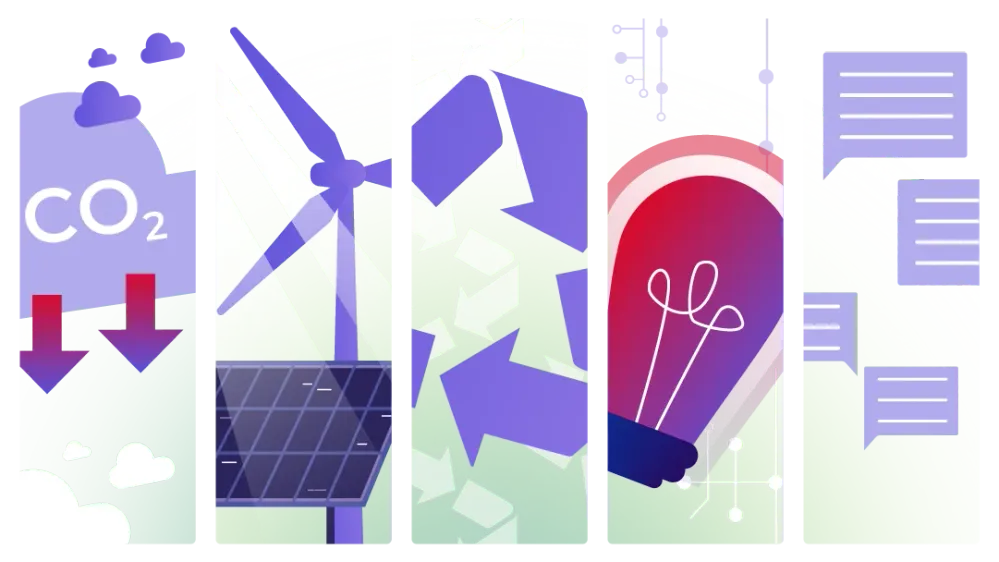
Reduce CO2 emissions: We keep CO2 emissions as low as possible across the entire value chain. This applies to both operations and the transport of goods.
Renewable energy: We source 100% of the electricity we use in Germany and Finland from renewable energy. We also want to continue expanding our use of renewable energy sources in the future.
Avoid waste and recycle: We use servers and other products in an energy-efficient way and keep them in service for a particularly long time. We resell some older hardware through our Server Auction. When hardware truly needs to be disposed of, we recycle it in accordance with strict environmental criteria.
Promote innovation: Technology can also help drive sustainability. For example, we produce small server components in our in-house 3D printing farm. This shortens the value chain and reduces transport routes. We are continually looking for new ways to use technology to save resources.
Communicate transparently: In addition to the measures we take, open and transparent communication matters to us. We see environmental protection as an ongoing process and accept our role as a leader among Europe’s largest data center operators.
How principles become concrete measures
On this basis, we derive concrete measures each year. Efficiency guides this work. We want to use energy and resources as effectively as possible. This applies, among other things, to:
- Planning data center parks
- Developing our own servers
- Building systems
- Cooling and airflow management
- Monitoring and control systems
What is a good PUE value?
A data center uses electricity in two areas: for the computing power of the servers and for non-IT systems such as security systems, lighting, and cooling. The less electricity a data center uses for non-IT areas, the more efficient it is.
The PUE value, short for Power Usage Effectiveness, measures exactly that. The ideal value would be 1.0, meaning all electricity would go into computing power. With an average value of 1.12, we perform significantly better than the industry average. According to Germany’s Federal Ministry for Economic Affairs and Climate Action, that average was 1.46 in 2024. But how do we achieve this value?
0% water cooling, 100% air cooling
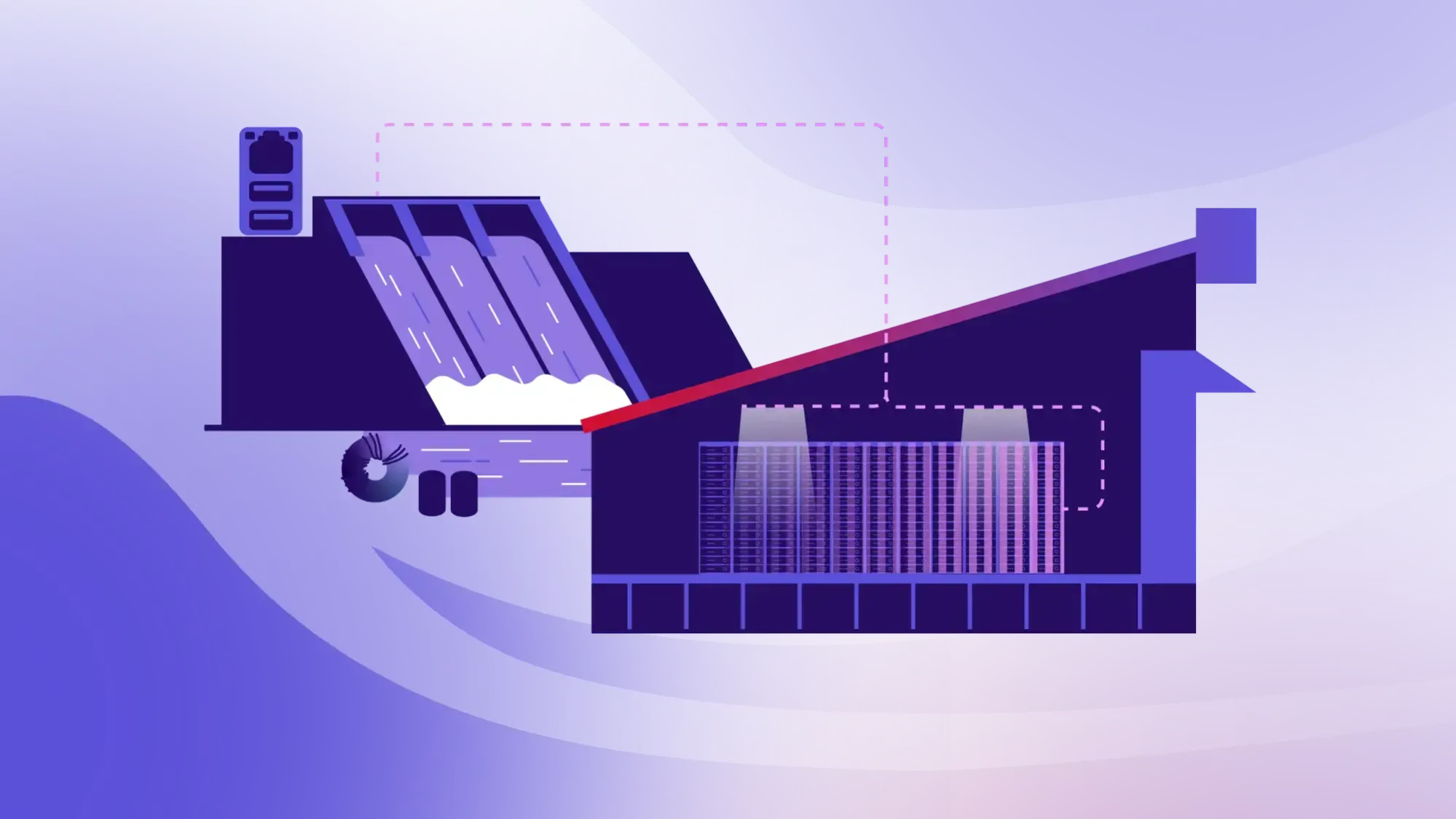
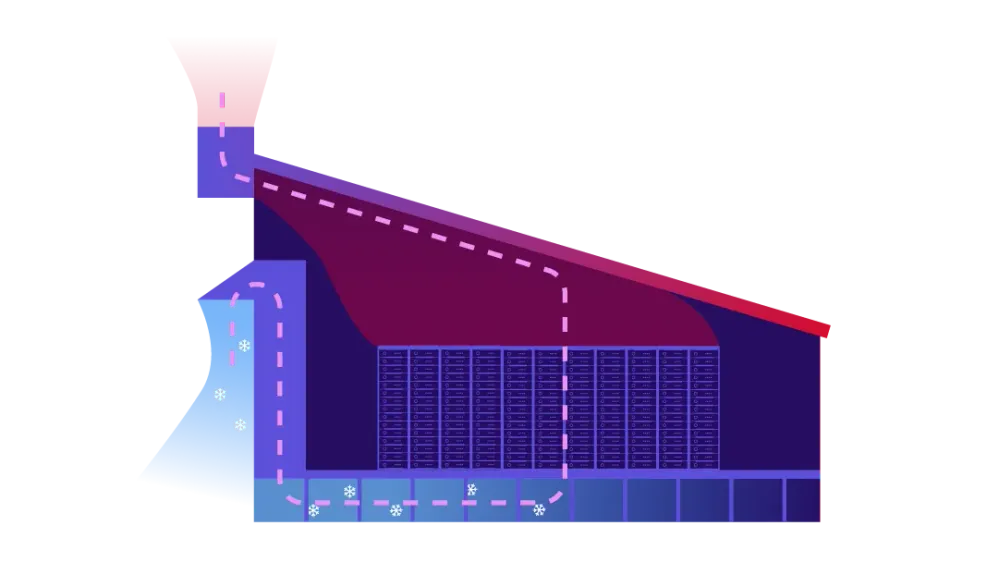
Servers generate heat during operation and need cooling. While other operators rely on water cooling or other energy-intensive methods, we use the outside air that is already available. Our infrastructure draws this air into the data center and guides it through the building so that it reliably reaches all components.
After that, the warmed air rises into the sloped pent roof, and we put it to further use: We use the waste heat to heat our offices and production areas.
Real-time control: The Efficiency Monitoring System
Our Efficiency Monitoring System measures energy consumption in real time and shows us where we can still improve. This helps us identify weak points immediately and make adjustments before energy is wasted unnecessarily.
Sustainable product lifecycle
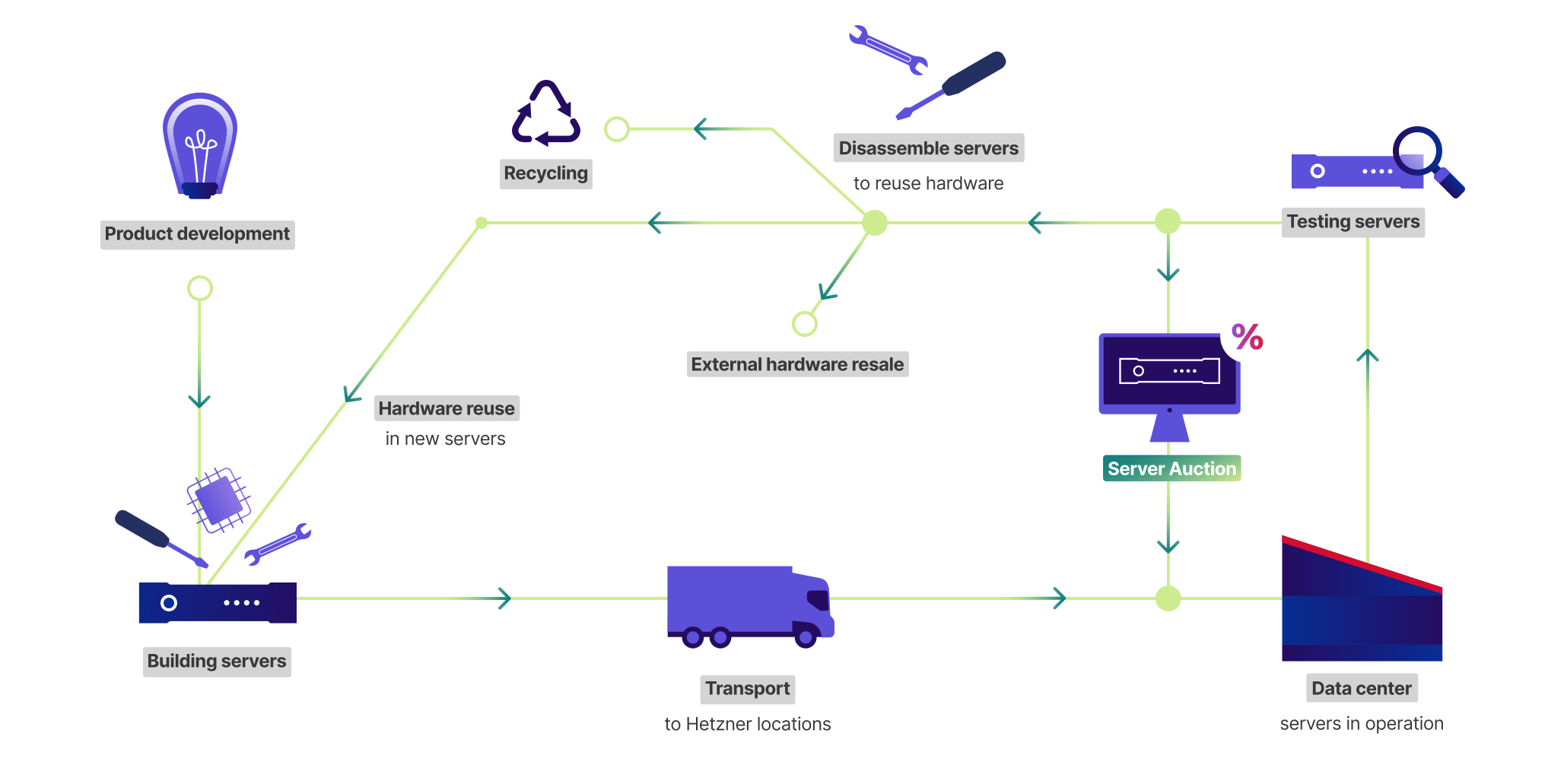
For us, using raw materials sparingly starts long before a server goes into operation. Because we print components like air ducts and mounts in our own 3D print farm, we save material and reduce long transport routes.
A server’s lifecycle begins in our hardware department, where we develop our own models. The advantage is that we can design them to be as energy-efficient as possible from the start.
When a server has finished its time in the data center, its lifecycle is far from over. Most servers move to our Server Auction, where customers can buy tested, ready-to-use hardware at affordable prices.
If a test reveals a hardware defect, we repair it. If that is not possible, we reuse individual components or recycle them. As a result, our servers reach an average service life of eight years.
We follow the same idea in logistics and transport, where we use reusable shipping boxes.
Our environmental goals through 2028
Standing still is not an option. Our environmental policy includes continuously developing all processes. For our first EMAS cycle, we have therefore set goals that we want to achieve by 2028 at the latest. These include:
- Further expanding renewable energy sources
- Making the product lifecycle even more resource-conscious
- Making supply chains more sustainable
- Supplying waste heat from our data centers to external heat consumers
We have already implemented some initial steps. You can find more information about this and much more in our Environmental Statement. If you're interested in the document, feel free to email us at emas@hetzner.com or request it through the ticket system.
You can find more background information on our sustainability page.